
Table of Content
Why Students Delay and How to Overcome It
What Is Procrastination (and Why It’s Not Laziness)?
The Hidden Psychological Triggers Behind Procrastination
Consequences of Procrastination for Students
Overcoming Procrastination: 5 Strategies for Students
How Teachers & Parents Can Help Students Beat Procrastination
The Psychology of Procrastination: Why Students Delay and How to Overcome It

As a teacher and mentor, I’ve often seen how students delay important tasks not out of laziness but because the work feels overwhelming, complicated, or filled with hidden fears. In school, many learners put off writing assignments or preparing for exams simply because they don’t understand the deeper psychological triggers behind procrastination. This delay chips away at both confidence and academic performance, leaving them stressed and unsure of their abilities. From my classroom experience, I’ve learned that the first step in breaking this cycle is helping students realize they are not alone—the challenges they face are common, and with the right mindset, they can transform hesitation into progress.
What Is Procrastination (and Why It’s Not Laziness)?
Procrastination is the tendency to postpone tasks despite knowing the negative consequences. While it may bring temporary relief, it causes long-term harm. Studies suggest that 20–25% of adults are chronic procrastinators, and this behavior is strongly linked with anxiety, depression, ADHD, low self-esteem, and unhealthy coping mechanisms. Beyond mental health, procrastination also impacts physical well-being. People who delay decisions often experience higher stress levels, avoid medical treatments, and create cycles of worsening health simply by putting things off.
Many mistake procrastination for laziness or a lack of willpower. Popular self-help messages reinforce this belief, urging individuals to “push harder” or “hustle.” But procrastination is not laziness it is fear. At its root, it often stems from perfectionism and fear of failure, where avoiding tasks feels safer than risking mistakes. While this avoidance may protect self-worth in the moment, it ultimately creates more stress and lost opportunities.
Understanding procrastination as a fear-driven behavior, not a character flaw, is the first step toward healthier, more compassionate strategies for productivity.
The Hidden Psychological Triggers Behind Procrastination

Procrastination isn’t just about laziness it’s often driven by deeper psychological triggers. Fear of failure, perfectionism, decision fatigue, and low motivation silently push us to delay tasks. By uncovering these hidden forces, you can understand why procrastination happens, shift your mindset, and apply simple strategies to break the cycle and regain focus on what truly matters.
1. Fear of Failure and Its Paralyzing Effects
The fear of failure often creates a cycle of hesitation, where students feel “not good enough” and freeze before taking action. This anxiety only grows with looming deadlines or expectations, creating a loop that fuels procrastination. Breaking tasks into smaller, manageable steps is one of the most effective ways to reduce this pressure and open doors to new opportunities.
2. Perfectionism
Perfectionism is another trap I’ve often seen in students. When performance feels tied to flawless results instead of genuine learning, even small mistakes can cause deep stress. By reframing perfectionism into a balanced drive for excellence, learners can stay motivated without being crushed by unrealistic standards.
3. Lack of Motivation
Waiting for inspiration rarely works. Often, boring or uncomfortable tasks are unavoidable parts of meaningful work. Real progress comes from engaging with small steps, even without instant rewards. Over time, consistent effort creates momentum and success.
4. Low Self-Confidence & Self-Doubt
Self-doubt acts like a fog, making students believe they lack ability when in reality, they only lack confidence. Recognizing these fears as temporary and not a reflection of true potential helps uncover the resilience and strength already within.
5. The Illusion of Time (“I’ll Start Tomorrow”)
One of the most common traps is believing “tomorrow” will always be available. In truth, procrastination robs time, opportunities, and growth. Learning to act today instead of waiting is the only way to reclaim control over goals and responsibilities.
Consequences of Procrastination for Students
1. Emotional Regulation and Self-Control
Research confirms that difficulty regulating emotions often leads to procrastination. Choosing short-term comfort over long-term goals can increase anxiety, depression, and poor focus. Building discipline and emotional resilience is critical for overcoming this pattern.
2. Short-Term Relief vs. Long-Term Harm
Avoidance may ease stress temporarily, but it creates lasting harm higher stress, lower grades, and weaker self-esteem. What feels easy in the moment becomes a heavy burden over time.
3. Protecting Mental Health
Unchecked procrastination damages mental health. Building healthy study habits, consistency, and routines not only protects emotional balance but also strengthens long-term resilience.
4. Academic Success Depends on Action
Procrastination leads to missed deadlines, rushed work, and poor performance. Addressing habits early helps protect both immediate grades and future opportunities. Consistent action is the foundation of lasting success.
Overcoming Procrastination: 5 Strategies for Students
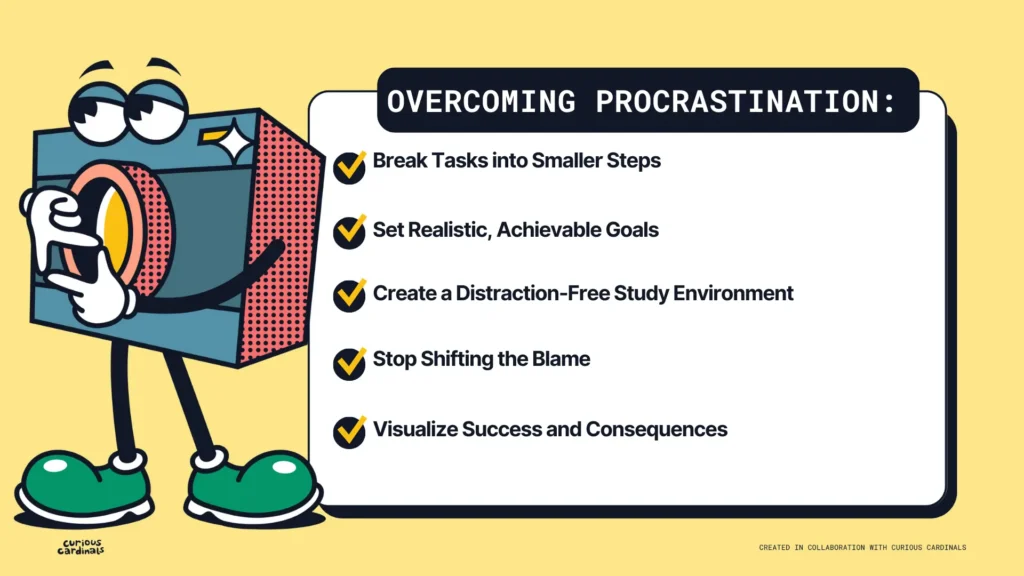
Procrastination can steal valuable study time, leaving students stressed and unprepared. The good news? With the right strategies, you can outsmart it. From breaking tasks into smaller steps to creating structured routines, these proven methods help you build focus, consistency, and confidence—so instead of delaying, you’ll start taking action and making steady progress every day.
1. Break Tasks into Smaller Steps
Big projects often feel overwhelming. Dividing them into smaller steps reduces stress, sharpens focus, and makes progress visible.
2. Set Realistic, Achievable Goals
Unrealistic goals create unnecessary pressure. Balanced, achievable objectives provide steady momentum and build confidence.
3. Create a Distraction-Free Study Environment
A quiet, distraction-free space strengthens focus. Turning off notifications and organizing a clear workspace helps build consistency.
4. Stop Shifting the Blame
Blaming circumstances only deepens procrastination. Taking full responsibility builds resilience and discipline, fueling growth.
5. Visualize Success and Consequences
Visualizing both the benefits of success and the costs of delay creates powerful motivation. Linking effort to long-term rewards strengthens consistency and accountability.
Science-Backed Methods to Train Your Brain
Studying smarter isn’t just about effort it’s about using proven techniques that align with how your brain actually works. These methods transform learning from a stressful grind into a structured, focused, and motivating routine.
Pomodoro Technique
Work in 25-minute blocks followed by 5-minute breaks. This method prevents burnout, boosts focus, and makes studying feel more manageable.
Time-Blocking
Assign specific time blocks to tasks like studying, revision, or rest. Treat them as appointments. This eliminates guesswork, reduces drift, and builds discipline.
Visualization & Affirmations
Pair affirmations with mental rehearsal. Telling yourself “I am capable” while visualizing success reduces self-doubt and builds confidence.
Habit Stacking
Tie new habits to existing ones. For example, review flashcards after breakfast or write in a journal before bed. Anchoring routines makes productivity easier and more natural.
How Teachers & Parents Can Help Students Beat Procrastination

Breaking free from procrastination isn’t just a student’s responsibility—teachers and parents play a powerful role in shaping the environment, guidance, and mindset that fuel motivation. With the right balance of support and independence, students can learn to stay consistent and confident in their studies.
Gentle Guidance Without Pressure
Nagging rarely works. Instead, offer gentle reminders, encouragement, and safe spaces where students feel supported.
Encouraging Autonomy Instead of Criticism
Harsh criticism worsens procrastination. Encouraging ownership, decision-making, and problem solving empowers students and reduces dependency.
Providing Structure and Support
A structured routine with designated study times at home and step-by-step project breakdowns in class helps students stay organized and avoid overwhelm. Pairing structure with emotional support ensures balance.
Conclusion
Understanding the psychology of procrastination goes far beyond the myth of laziness. It requires addressing the fears, habits, and doubts that silently hold students back. By applying science-backed strategies like the Pomodoro technique, time-blocking, visualization, and habit stacking and by receiving compassionate guidance from teachers and parents students learn to transform hesitation into action. In doing so, they not only improve grades but also build confidence, resilience, and self-discipline that last a lifetime. What once felt like wasted time becomes a powerful journey of growth, purpose, and success
Related Articles And Topics









Unlock 150 motivational quotes for students to beat laziness, stay focused, and build confidence. Perfect inspiration for exams, studies, and daily success ,..readmore..


