
Table of Contents
What Schools Don’t Teach but Life Always Tests
Confidence: Not Loudness, But Inner Evidence
Creativity: The Lost Muscle in the Age of Templates
Weird Journal”: A Simple Practice to Reignite Creativity
Communication: The Bridge Between Thinking and Opportunity
The Confidence Creativity Communication Loop
Breaking the Grade Addiction: Measuring Yourself Differently
Turning Skills into Long-Term Identity
Real-World Application: Practicing What Grades Can’t Measure
Beyond Grades: How Students Can Build Confidence, Creativity, and Communication Skills

The Invisible Curriculum: What Schools Don’t Teach but Life Always Tests
Walk into any classroom, and you’ll see the same rhythm: lectures, grades, deadlines, and exams. It’s a system built to measure intelligence, yet it often misses the qualities that truly shape a person’s future. Modern education tends to celebrate the visible test scores, report cards, and academic titles while the invisible lessons that define success are quietly ignored.
In reality, grades can open doors, but skills keep them open. Many students discover this too late, only after stepping into the real world where results depend not on memorized facts but on emotional balance, clear communication, and adaptability under pressure.
A Quick Story: When the “Topper” Lost and the “Average” Won
Imagine two students: Ali, a consistent high scorer, and Sara, an average performer who never topped a class but always volunteered for group projects. After graduation, both apply for a competitive internship.
Ali aces the technical questions but freezes during the group discussion his words stumble, his ideas stay unspoken. Sara, on the other hand, confidently listens, responds, and connects ideas from others. She doesn’t know all the answers, but she knows how to navigate people and express thoughts clearly.
Guess who gets the offer? Sara.
That’s the invisible curriculum at work a silent syllabus of skills that schools rarely grade but life constantly tests.
The Hidden Syllabus of Success
Beyond formulas and essays lies a different kind of intelligence, one that’s emotional, creative, and deeply human. It’s the ability to adapt when plans change, to communicate even when it’s uncomfortable, to think creatively when there’s no obvious solution, and to take risks without fearing failure.
These qualities of emotional maturity, self-expression, adaptability, and creative risk-taking are what employers, entrepreneurs, and leaders rely on daily. They form the foundation of soft skill intelligence, the ability to read situations, manage relationships, and stay grounded in chaos.
Holistic Growth and Real-World Readiness
True education isn’t just about mastering subjects; it’s about shaping identity. Students who focus only on academics often find themselves underprepared for life’s unstructured challenges managing stress, making decisions, handling rejection, or collaborating with diverse teams.
Holistic growth means learning to connect intellect with emotion, theory with empathy, and logic with self-awareness. When you nurture both academic and personal dimensions, you build real-world readiness the confidence to stand out not because of grades, but because of grounded understanding and emotional balance.
Confidence: Not Loudness, But Inner Evidence
Most people imagine confidence as the loudest voice in the room someone bold, outspoken, and socially fearless. But that’s a myth. Real confidence isn’t about volume; it’s about inner evidence, the quiet certainty that comes from proving to yourself, over time, that you can handle life’s tests.
In other words, confidence isn’t inherited. It’s built, step by step, through what psychologists call self-efficacy, the belief that you can influence outcomes through your own actions. This belief doesn’t appear overnight; it grows through a series of micro-wins that reshape how you see yourself.
The Myth of “Born Confidence” vs. Built Confidence
Society loves to label people: “She’s naturally confident,” or “He’s just shy.” But confidence isn’t a personality trait you’re born with, it’s a behavioral skill developed through practice, exposure, and reflection.
Think of it this way: the students who speak fluently in class weren’t always that way. They started by answering one question, giving one presentation, or speaking to one new person. Each small success became a proof point, feeding a positive competence loop the brain’s way of linking effort with success. Over time, those repetitions rewired their self-perception from “I can’t” to “I can.”
That’s the real secret: confidence is a result, not a prerequisite.
The Cognitive Loop: How Small Wins Rewire Self-Image
Every time you complete a small challenge whether it’s finishing an assignment early or asking a question you once avoided your brain records a win. These wins trigger dopamine, the brain’s “reward signal,” and reinforce a new identity: someone capable.
This cycle, known as the competence loop, works like this:
Action → Achievement → Evidence → Confidence → More Action.
It’s a loop because each success builds a new belief, and that belief fuels the next success. Over time, this rewiring strengthens behavioral confidence the type that stays even when circumstances change.
The Confidence Triangle: Preparation + Self-Talk + Posture
Confidence may feel emotional, but it’s built on structure.
Here’s a simple framework the Confidence Triangle that turns abstract motivation into action:
- Preparation: Know your material, your goal, and your environment. The more prepared you are, the less fear controls you.
- Self-Talk: Replace self-criticism with constructive language. Instead of “I’ll mess this up,” try “I’ve practiced for this.”
- Posture: Body language sends cues to your mind. Standing tall, breathing deeply, and maintaining eye contact aren’t cosmetic tricks they reinforce internal calm and external presence.
When these three elements align, confidence becomes less about pretending and more about being mentally and physically congruent with your intentions.
A Real Example: Rebuilding Confidence One Presentation at a Time
Take Ahmed, a university student who dreaded public speaking. His voice shook during every presentation, and he often avoided volunteering for group projects. But instead of waiting to “feel confident,” he made a small plan: one presentation per semester.
The first one was messy trembling hands, fast breathing, and forgotten lines. But after each attempt, Ahmed reflected on what went right, not just what went wrong. By his third semester, he noticed a shift his self-perception changed. Each micro-win built inner evidence that he could stand in front of others and deliver.
Today, Ahmed mentors first-year students on public speaking and presentation skills. His transformation wasn’t magic; it was the confidence triangle in motion small, deliberate steps anchored in preparation, mindset, and posture.
True confidence doesn’t roar it reassures. It’s not about overpowering others but aligning your inner belief with your outer behavior. Once students understand this, they stop waiting for confidence to appear and start building it from the inside out one micro-win at a time.
Creativity: The Lost Muscle in the Age of Templates

Scroll through a classroom or social feed today, and you’ll notice something strange everyone’s answers look the same. Perfectly formatted essays, identical Canva projects, even “unique” ideas that follow the same predictable formula. Somewhere between school rubrics and social expectations, creativity quietly slipped away. Most students aren’t less creative by nature they’re just conditioned to play safe. The system rewards correctness, not curiosity. Over time, the message becomes clear: Don’t be wrong; be right.
That’s the grading trap when the fear of losing marks outweighs the desire to explore. The result? A generation of brilliant students who can analyze perfectly but struggle to imagine differently.
Why We Lose Creativity as We Grow Older
As children, creativity comes effortlessly. We draw without doubting, invent without hesitation, and ask “why” endlessly. But as we progress through school, that instinct gets replaced with standardization.
Tests demand the “best answer,” not many answers. Teachers, pressed by time and curricula, often have to evaluate structure more than spark. Slowly, we internalize that there’s only one correct path and our brains adapt by avoiding risk.
Psychologists call this convergent bias the tendency to favor existing solutions over novel ones. When it dominates, divergent thinking, the skill to see multiple perspectives or connect unrelated ideas begins to fade. The tragedy isn’t that we lose creativity; it’s that we stop using it, and like any unused muscle, it weakens.
Rebuilding the Creative Muscle: Curiosity and Reframing
The good news? Creativity isn’t gone, it’s dormant, waiting to be reactivated. Unlike talent, creativity is a trainable mental habit.
Start with curiosity-based learning, a shift from asking “What do I need to know for the exam?” to “What happens if I explore this angle?” When students follow genuine curiosity, they trigger associative learning, where unrelated bits of information form surprising connections.
For example, a student studying biology might read about city architecture and suddenly realize both share principles of structure, adaptation, and sustainability. That’s cognitive flexibility, the mental ability to jump between frameworks and generate new ideas.
The second method is problem reframing. Instead of asking “How do I solve this?” try “How else could I look at this?”
When you reframe, your brain searches for new neural routes, activating the imagination triggers the spark that turns logic into innovation.
The 5-Minute “Weird Journal”: A Simple Practice to Reignite Creativity
Here’s a practical tool for students who want to rebuild creative confidence the 5-Minute Weird Journal.
Each day, take five minutes to write something weird: connect two unrelated things, describe an ordinary object from an alien’s perspective, or imagine a world where gravity only works on weekends.
This isn’t about writing skill it’s about training your brain to bridge distant concepts. That mental stretch activates divergent thinking and strengthens associative pathways, both crucial for creative problem-solving.
Example:
A student once wrote, “If emotions had Wi-Fi signals, anxiety would have the strongest connection.” That single metaphor later helped her write a standout essay on digital mental health proof that creativity feeds academic excellence, not distracts from it.
Why Boredom, Silence, and Mistakes Are Creativity’s Best Teachers
In a world addicted to stimulation, we’ve forgotten the value of mental stillness. Yet boredom isn’t emptiness, it’s incubation. When your brain isn’t flooded with inputs, it starts forming original connections in the background.
Silence gives creativity the space to breathe. Mistakes, on the other hand, give it direction. Every creative mind from inventors to writers relies on trial and error to find originality. Without the freedom to fail, imagination stays trapped in caution.
So, if you’re ever stuck creatively, don’t scroll. Let boredom stretch your focus. Let mistakes teach flexibility. That’s how the lost muscle grows back stronger.
The Takeaway: Creativity Is the Core Skill of the Future
As automation and AI handle routine tasks, what remains truly human is our capacity for imagination to dream, question, and connect beyond logic.
Students who train this muscle early will not only stand out academically but thrive in the unpredictable world beyond.
Creativity isn’t a luxury anymore it’s real-world intelligence in action.
And it starts not with inspiration, but with small, daily acts of curiosity.
Communication: The Bridge Between Thinking and Opportunity
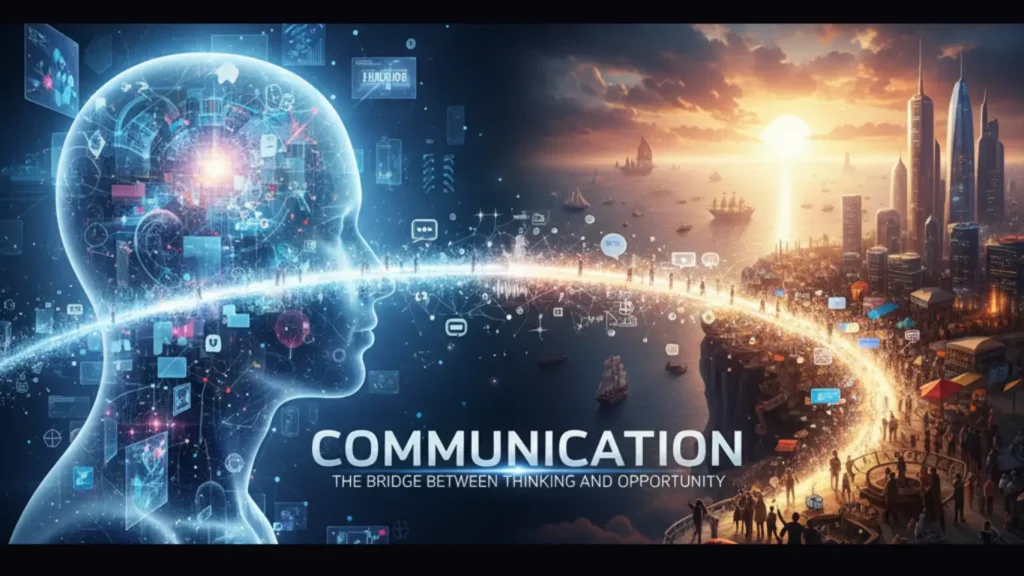
Intelligence without communication is potential energy powerful but unused.
In today’s academic and professional world, being “smart” isn’t enough if you can’t translate your thoughts into words that move people. Whether it’s writing a scholarship essay, presenting a research idea, or connecting during a group project, your ability to express ideas clearly determines how far your thinking travels.
Communication isn’t just about vocabulary or grammar; it’s about emotional design shaping words in a way that resonates with your audience.
The Real Power Behind Effective Communication
Many students assume communication is about sounding intelligent. But in reality, it’s about being understood.
Your goal is not to impress people it’s to connect with them. The best communicators use empathy, timing, and tone to make their message land exactly as intended.
Think of communication as an emotional algorithm:
- Tone sets the emotional context.
- Empathy builds trust.
- Timing ensures your message fits the moment.
For instance, in a team discussion, saying the right thing at the wrong time can backfire not because your idea lacked value, but because it lacked relational awareness. That’s expressive intelligence: knowing how your message will feel to others, not just how it sounds to you.
Expressive Intelligence: Thinking Out Loud, Intentionally
Expressive intelligence is the ability to make complex ideas feel clear, relevant, and emotionally grounded.
It combines logic (clarity of thought) with intuition (awareness of how others receive your words).
Students often underuse this skill because they fear saying the “wrong” thing. But the truth is, authentic expression beats perfect phrasing. When your message is rooted in genuine intent, people listen whether it’s a professor, interviewer, or peer.
This is why employers and mentors often say they value “soft skills”: they’re really talking about expressive intelligence the skill that turns private knowledge into public impact.
The One-Minute Clarity Challenge
Here’s a simple exercise to sharpen this skill daily:
The One-Minute Clarity Challenge.
Pick a complex idea from your studies something that usually takes a paragraph to explain. Then, challenge yourself to explain it to a friend or even to your phone camera in one minute without losing meaning.
This builds three essential habits:
- Compression — removing filler words and mental clutter.
- Clarity — focusing on the essence of your thought.
- Confidence — training your mind to organize information on the fly.
When you can express a hard concept simply, you’re not dumbing it down you’re leveling it up. You’re turning abstract knowledge into accessible insight.
Authenticity in Action: Real-World Example
Imagine you’re at a university networking event. Two students approach a guest speaker.
- One delivers a memorized introduction full of buzzwords.
- The other speaks naturally: “I really enjoyed your article on sustainable design. It changed how I think about user experience.”
Guess which one makes the better impression?
Authenticity wins every time. Memorization may sound polished, but authentic curiosity builds connection and that’s the foundation of real opportunities.
The same rule applies to interviews, presentations, and even group discussions. The goal isn’t to perform intelligence; it’s to express it through clarity, sincerity, and empathy.
Communication as Opportunity Engineering
Strong communication skills don’t just help you share ideas, they create opportunities.
Every scholarship, internship, or leadership role begins with a conversation written or spoken. When you can articulate your thoughts clearly and connect emotionally, you turn invisible potential into visible results.
This is why communication is more than a “soft skill”; it’s an academic superpower. It bridges the gap between knowledge and recognition, between thinking deeply and being remembered.
When you learn to speak with precision, listen with empathy, and write with purpose, communication stops being a subject it becomes your most valuable currency in the world of ideas.
Key Takeaway
Your mind may hold ideas that could change your future but only communication can deliver them.
Build expressive intelligence, practice the One-Minute Clarity Challenge, and approach every interaction as a chance to connect authentically.
In the end, great communicators aren’t just heard they’re trusted. And in a world overflowing with information, trust is the new intelligence.
The Confidence Creativity Communication Loop

If you look closely at every high-performing student or creator, you’ll notice one thing: confidence, creativity, and communication never operate alone. They form a loop each feeding and strengthening the others. When one grows, the rest accelerate.
This isn’t just motivation talk; it’s momentum psychology in action. Like gears in motion, once one turns, the others begin to spin faster. And when you deliberately train this loop, it becomes a self-sustaining cycle of growth that transforms how you learn, express, and lead.
How Confidence Fuels Creativity
Confidence isn’t arrogance, it’s trust in your ability to explore.
When you feel confident, your brain releases neurotransmitters like dopamine that reduce the fear of failure and open space for creative thinking. You stop worrying about how your ideas will be judged and start playing with them.
For example, a student who feels unsure in class may hesitate to share ideas, fearing they’ll sound “wrong.” But when confidence is present, curiosity takes over and that’s when creativity flows. You begin asking “What if?” instead of “What will they think?”
This shift from fear-based to exploration-based thinking is what psychologists call cognitive flexibility, a key driver of both creativity and deep learning.
Practical move: Start small by sharing one “unfinished idea” daily in class, in a group chat, or even a journal. The goal isn’t to be right; it’s to stay expressive. Every time you voice a thought, you train your brain to treat creativity as a safe space.
How Creativity Builds Better Communication
Creativity isn’t just for artists it’s for thinkers who want to be understood differently.
When you’re creative, you don’t rely on recycled language or standard answers. You find fresh ways to frame ideas, turning abstract thoughts into vivid stories or analogies that stick in people’s minds.
For instance, instead of saying “I’m stressed about exams,” you might say, “My brain feels like it has 100 open tabs.” That’s creative communication and it connects instantly.
This connection is what modern educators call linguistic resonance expressing ideas in ways that emotionally sync with others. Creativity makes your message not just heard, but felt.
Practical move: Try the “metaphor habit.” Whenever you study something complex, describe it using a visual or analogy (“Neurons are like traffic signals for thoughts”). It strengthens your neural links and your communication muscles.
How Communication Reinforces Confidence
When your ideas land well when someone nods, smiles, or says “I get that” your confidence multiplies. This feedback loop strengthens what psychologists call self-efficacy, the belief that your actions can make a difference.
Each time you express an idea and it’s received well, your brain logs a win. This creates a feedback cycle:
Expression → Validation → Motivation → More Expression.
In student life, that might look like presenting a project clearly, getting recognition from peers, and then feeling empowered to take on bigger challenges next time. Communication becomes the engine of confidence renewal.
Practical move: After any interaction class presentation, message, or meeting ask one question: “Did my message reach the person, or just the room?” This reflection helps you focus on impact, not perfection.
The Loop Effect: Growth as an Ecosystem
When confidence, creativity, and communication start reinforcing each other, learning stops feeling forced it starts feeling flowing.
This is the flow state, where attention, emotion, and purpose align. In this loop:
- Confidence fuels the courage to create.
- Creativity shapes messages worth sharing.
- Communication amplifies your ideas and reinforces confidence.
This is what I call growth ecology a learning ecosystem where your mindset, habits, and expression evolve together. It’s how some students seem to grow exponentially with less burnout: they’re not adding more effort; they’re aligning their growth systems.
Mini Blueprint: Habit Stacking the Loop
- Confidence Practice → Start your day with one micro-win (e.g., finishing a short reading, organizing your notes).
- Creativity Practice → Spend 10 minutes journaling or brainstorming freely no judgment.
- Communication Practice → Share your insights publicly (study group, post, or class question).
Do this daily for two weeks. You’ll notice something subtle but powerful ideas become easier to express, focus lasts longer, and learning feels more meaningful. That’s momentum psychology at work
3. Automate: Make Distraction Harder Than Focus
Key Takeaway
Confidence gives you the voice to create.
Creativity gives you the language to communicate.
Communication gives you the validation to stay confident.
When you integrate these three intentionally, you build a sustainable cycle of personal growth one that doesn’t depend on motivation alone. This is the student’s modern superpower: not working harder, but learning smarter through self-reinforcing habits.
Because in the end, the most successful learners aren’t those who master subjects they master themselves.
Breaking the Grade Addiction: Measuring Yourself Differently

Somewhere along the journey of education, many students start believing that grades define who they are. An “A” means worthiness; a “C” feels like failure. Over time, grades stop being just feedback; they become identity.
This is what psychologists call external validation dependency the emotional habit of measuring self-worth through others’ approval. And in education, that approval often comes wrapped in numbers, GPAs, and report cards.
But here’s the truth most systems forget to teach: grades are temporary applause, not permanent truth. They capture performance in a moment, not the full picture of growth.
The danger of grade addiction is subtle. It can turn learning into a performance you stop learning for understanding and start learning for validation. That’s when even high achievers feel empty despite their success.
The Emotional Trap of External Validation
When your sense of achievement depends on external rewards, you hand over control of your happiness. The more you chase approval, the less connected you feel to your internal drive.
Research on intrinsic motivation shows that genuine fulfillment comes from autonomy, mastery, and purpose not comparison.
In simpler words: you feel most alive not when others praise you, but when you see yourself growing in ways that matter.
For example, a student who once feared public speaking may still score average on presentations, but if she stands up without freezing that’s emotional progress. That’s growth no exam can grade.
This is where the idea of the Internal Scoreboard begins.
The Internal Scoreboard: Measuring Growth That Grades Miss
The Internal Scoreboard is your personal system for tracking what traditional metrics ignore courage, consistency, self-awareness, and contribution.
Instead of asking “What grade did I get?”, try asking:
- Did I step outside my comfort zone this week?
- Did I handle stress or feedback better than last time?
- Did I help someone understand something I once struggled with?
These are invisible victories — small but powerful indicators of intrinsic growth.
Over time, tracking them rewires your brain’s motivation system. You stop studying just to impress and start studying to improve. This shift from performance-based identity to progress-based identity builds emotional literacy the awareness of how feelings drive choices and resilience.
When students start scoring themselves internally, they discover a freedom that no report card can give the confidence to grow without needing permission.
How to Build an Internal Scoreboard (Practical Framework)
Here’s a simple, actionable method students can start today:
- Create a “Growth Categories” list.
Choose three areas that matter to you beyond academics for example: courage, curiosity, and contribution. - Set micro-goals.
Example:- Courage → Speak once in class discussion.
- Curiosity → Read one article outside the syllabus.
- Contribution → Help a friend revise for a quiz.
- Courage → Speak once in class discussion.
- Reflect weekly.
At the end of the week, rate each category from 1–5, not to judge but to notice patterns. - Celebrate internal wins.
If your courage score improves, reward yourself not with comparison, but with acknowledgment.
This simple act of mindful reflection trains your brain to seek intrinsic motivation over external approval.
The Power of Self-Assessment Journals
Students who keep self-assessment journals often report more clarity, focus, and emotional balance. These journals work because they make invisible progress visible.
Write about moments of discomfort, decisions you’re proud of, or habits you’re rebuilding. Don’t filter be honest. Over time, this builds self-awareness, the cornerstone of emotional intelligence.
Here’s a simple example:
“I didn’t get the grade I wanted, but I stayed calm, reviewed feedback, and asked the teacher how to improve. Last year, I would’ve shut down. That’s progress.”
This single reflection shows maturity far beyond academic marks it reflects resilience, emotional regulation, and personal benchmarking.
Reframing Success for a Healthier Mindset
Grades matter but they’re not the whole story. What matters more is how you handle feedback, learn from mistakes, and keep showing up when things get hard.
When students measure themselves by effort, courage, and learning depth, they build sustainable motivation, the kind that lasts long after the semester ends.
Because at the end of the day, your future self won’t remember your GPA; they’ll remember the habits, reflections, and mindset that shaped your confidence.
And that’s the ultimate internal grade worth working for.
Turning Skills into Long-Term Identity
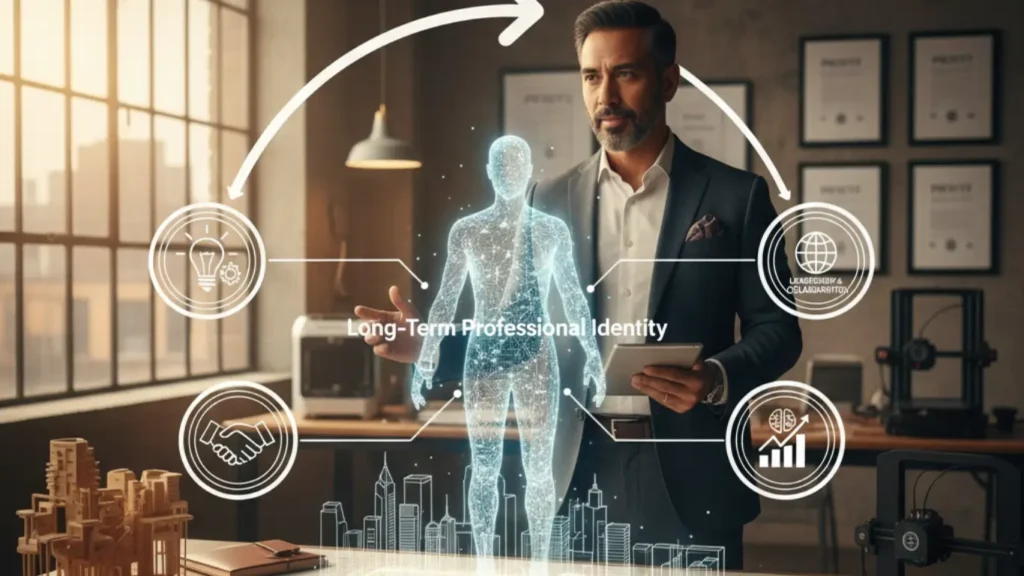
Motivation gets you started but identity keeps you going.
Many students feel a sudden rush of inspiration after reading something powerful, attending a seminar, or scoring well on an exam. But a few weeks later, that energy fades. The reason isn’t laziness it’s that their identity never changed.
Temporary motivation is like a spark; it burns bright but short. Long-term change happens only when you stop asking, “What should I do?” and start asking, “Who am I becoming?”
That’s the quiet secret of lasting growth: you don’t need more motivation you need a new self-concept.
Why Temporary Motivation Fails Without Identity Change
When your goals don’t align with how you see yourself, progress feels forced.
For example, a student might say, “I need to study consistently,” but still identify as “someone who procrastinates.” Every action then feels like resistance because it conflicts with their current self-image.
Psychologists call this the habit–identity mismatch when behavior tries to change before belief does.
That’s why motivation fades: your old identity pulls you back like gravity.
The real transformation begins when you redefine who you are.
Instead of “I’m a student trying to get better at writing,” say, “I’m a communicator sharpening my craft.”
Instead of “I’m forcing myself to study math,” say, “I’m a problem solver training my logic.”
Language matters. Every new label you adopt shifts how your brain perceives effort. Once identity and habit align, action feels natural, not pressured.
From Roles to Identities: Expanding How You See Yourself
Most students think of themselves through a single lens: “I’m just a student.”
But that mindset limits potential. A student isn’t just learning for grades they’re developing skills that shape who they become in the world.
Reframe your self-description:
- “I’m a student” → “I’m a learner — someone who grows from every experience.”
- “I’m doing assignments” → “I’m practicing discipline and time management.”
- “I’m studying” → “I’m training my focus and creativity.”
This subtle shift activates psychological ownership the sense that your actions belong to you, not external pressure. Once you identify as the type of person who does the thing, consistency becomes effortless.
The Habit Integration Model: Tiny Actions → Daily Embodiment → Lifetime Confidence
Identity isn’t built in a moment; it’s embodied through repetition.
Think of it as the Habit Identity Loop a simple three-step model that turns skills into who you are:
- Tiny Identity-Based Actions
Start small, but intentional.- Instead of saying “I’ll read for an hour,” start with “I’m a curious learner who reads one page daily.”
- Instead of “I’ll be confident,” try “I’m someone who speaks up once each day.”
- Instead of saying “I’ll read for an hour,” start with “I’m a curious learner who reads one page daily.”
- Daily Embodiment
Repetition builds reinforcement. The more you act like the person you want to become, the more your brain updates its internal image. Neuroscience calls this neuroplastic reinforcement each repetition rewires self-belief. - Lifetime Confidence
After weeks or months, habits evolve from effort to identity. You no longer “try” to be disciplined — you simply are disciplined. Confidence then stops being situational and becomes part of your self-definition.
That’s how sustainable success forms not from big goals, but from identity-based micro-actions done consistently.
The Transformation Mindset: Becoming, Not Performing
Students often pressure themselves to perform better to prove worth through achievements. But high performers, thinkers, and creators share a different perspective: they don’t chase outcomes; they become the type of person who creates them naturally.
This is called the transformation mindset focusing less on immediate results and more on long-term becoming.
Ask yourself:
“Am I chasing outcomes or shaping identity?”
When you build identity first, results follow effortlessly. Grades improve because focus improves. Communication strengthens because you see yourself as a communicator. Growth stops feeling like a struggle and becomes a reflection of who you already are.
The Takeaway: Let Who You Are Drive What You Do
When you change your identity, your actions align naturally.
You no longer depend on motivation to push you forward your habits pull you instead.
So, stop waiting to “feel ready.” Start living the version of yourself you aspire to be, even in tiny ways.
Every small identity-based habit you practice today becomes part of the story you’ll tell tomorrow.
Because lasting success isn’t about adding more it’s about becoming more of who you’re meant to be
Real-World Application: Practicing What Grades Can’t Measure
Knowledge matters but application transforms it into wisdom.
Students often wait for “big opportunities” to prove their skills, but growth rarely happens in grand moments. It’s built quietly through behavioral consistency small, repeatable actions that stretch comfort zones and strengthen identity.
Here are three micro-challenges that turn theory into transformation:
1. Speak to One New Person Daily
Start a simple conversation with a classmate, teacher, or stranger. Each interaction strengthens your adaptive competence, the ability to connect, listen, and respond in unfamiliar contexts. Over time, communication stops feeling like performance and starts feeling natural.
2. Create One Idea Journal Entry a Week
Dedicate a notebook (or notes app) to your random thoughts, solutions, or “weird ideas.” This trains skill transfer linking knowledge from different areas to generate creative solutions. It also builds self-trust: the more you record, the more you realize how capable your mind already is.
3. Reflect Every Sunday on One Non-Academic Win
Ask yourself: What did I handle better this week? Maybe you managed stress, helped a friend, or tried something new. Writing it down strengthens self-reflection and rewires focus from grades to growth from “How did I perform?” to “How did I evolve?”
Case Snippet: A 30-Day Shift in Mindset
Sara, a student overwhelmed by low grades, tried these micro-habits for a month.
At first, nothing felt different until she realized she was speaking more confidently, journaling with curiosity, and viewing mistakes as feedback. Her GPA hadn’t changed yet, but her mindset had.
That’s the real-world win: she began measuring herself by progress, not perfection and that’s what grades can’t measure.
The New Definition of “Smart”
Once, being “smart” meant memorizing facts, scoring high, and recalling information faster than others.
But in today’s world where knowledge is one search away that definition feels outdated.
Smart is no longer about memorization; it’s about adaptation.
The ability to learn, unlearn, and relearn is the new measure of intelligence. It’s not what you know that defines you, but how quickly you can grow from what you don’t.
The Modern “Student of Life” Mindset
True intelligence today belongs to those who stay curious who see every mistake as data, every challenge as a lesson. The modern learner doesn’t chase perfection; they build agility.
Agility beats accuracy because the world changes faster than any textbook can update. A student of life doesn’t just master answers they master the art of asking better questions.
To be “smart” now means being flexible, emotionally aware, and grounded enough to evolve when things shift.
Learning Through Self-Expression, Not Competition
The most confident students aren’t those who compete for attention, they’re the ones who express their thoughts honestly, creatively, and courageously.
Self-expression turns learning from a race into a journey. It builds self-trust, empathy, and perspective qualities that make you useful in real life, not just impressive on paper.
When learning becomes an act of expression rather than comparison, you stop trying to be “the best” and start trying to be yourself but better each day.
A Closing Perspective: From Grades to Growth
The next generation won’t be remembered by GPAs or certificates. They’ll be remembered by how they adapted, how they communicated, and how they used their knowledge to make life better for themselves and for others.
So, if you ever doubt your potential, remember this:
You’re not here just to pass exams. You’re here to understand, to grow, to evolve.
Because being smart today isn’t about having all the answers
It’s about staying curious enough to keep asking the right ones
Related Articles And Topics


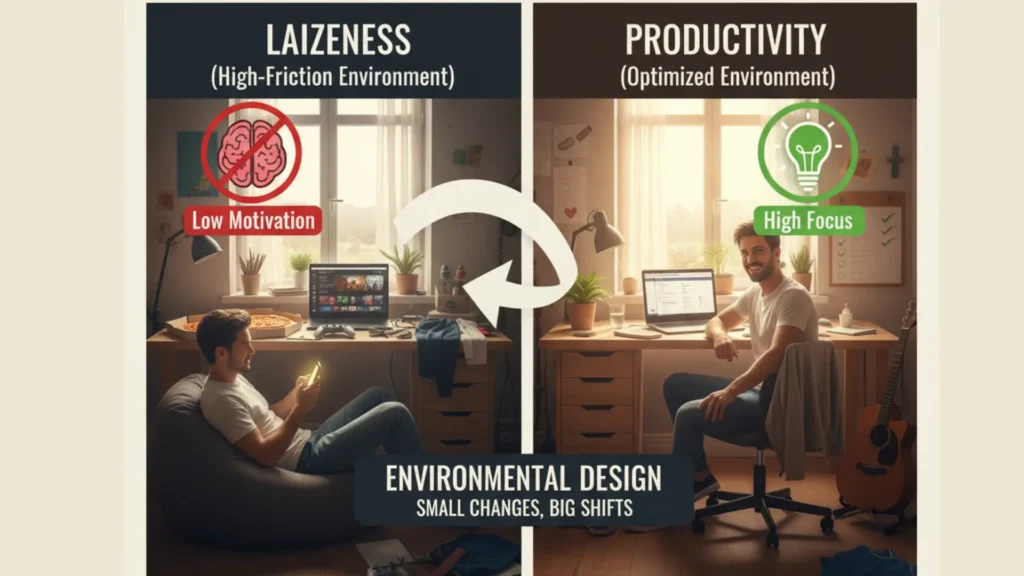








Unlock 150 motivational quotes for students to beat laziness, stay focused, and build confidence. Perfect inspiration for exams, studies, and daily success ,..readmore..


