
From Stress to Success: Practical Mental Health Routines Every Student Should Try Now

Introduction: Turning Stress Into Strategy
Every student knows the hidden weight of academic life. Between classes, assignments, exams, and social expectations, stress often becomes a daily companion. But here’s the truth: stress itself isn’t the enemy unmanaged stress is. The real solution lies in building simple, repeatable routines that protect your focus, energy, and mindset.
Think of “routine” not as a boring schedule, but as a proactive academic tool — one that saves time, prevents burnout, and builds consistency. By making routines part of your day, you don’t just survive student life; you thrive in it.
In this article, we’ll explore five powerful pillars of mental health routines that can transform stress into success:
- Sleep & Recovery (for sharper focus)
- Study Cycles (for sustainable learning)
- Movement & Energy (for physical resets)
- Emotional Regulation (for inner calm)
- Accountability Systems (for long-term consistency)
Each is practical, science-backed, and designed for students who want balance without losing productivity.
Routine 1: The Foundation of Focus – Optimizing Sleep and Recovery
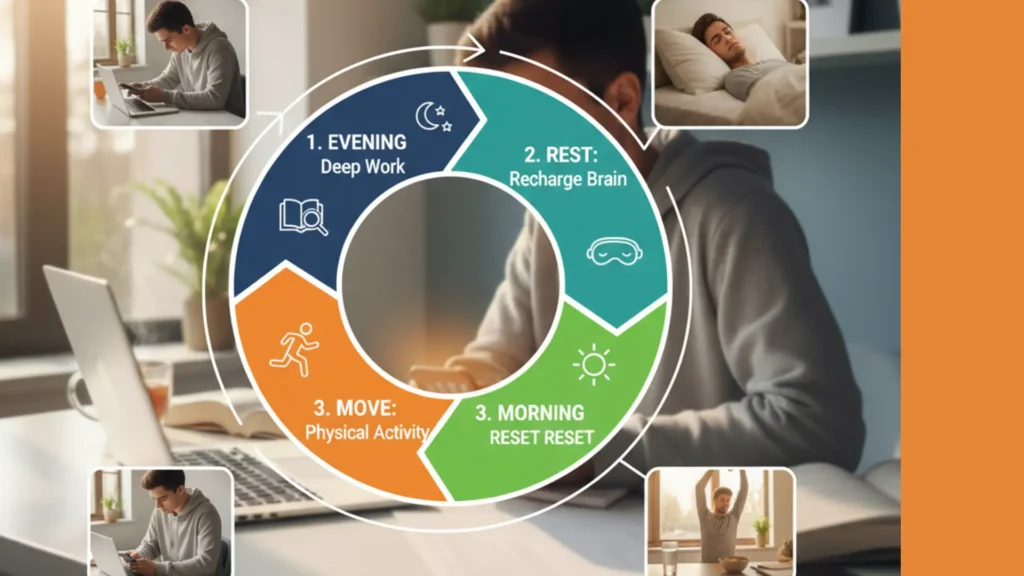
Lack of sleep is one of the biggest silent killers of academic performance. A tired brain struggles with memory, focus, and even emotional control. Yet, most students treat sleep like an optional luxury instead of the foundation it is. When you fix your sleep, you fix half of your stress.
The 3-2-1 Student Sleep Rule
3 hours before bed → Stop eating heavy food. Your digestive system needs downtime to prepare for quality sleep.
2 hours before bed → Stop academic work. Give your brain a chance to slow down and process what you learned.
1 hour before bed → Stop looking at screens. Blue light tricks your brain into thinking it’s still daytime, making it harder to fall asleep.
This routine may sound simple, but it’s a game-changer. Students who follow this often notice improvements in focus, mood, and energy within just a week.
The Power of the 15-Minute Brain Dump Journal
Have you ever laid in bed, replaying tomorrow’s to-do list in your mind? This mental clutter is a major reason students struggle to fall asleep. The solution: a 15-minute brain dump journal.
Every night, write down:
Tasks you need to do tomorrow
Worries currently on your mind
One positive thing you achieved today
This clears the brain, reduces anxiety, and signals to your mind: “It’s safe to rest now.” Over time, it becomes a powerful habit that turns restless nights into deep recovery.
Routine 2: The Anti-Burnout Study Cycle

Burnout doesn’t come from studying too much, it comes from studying without strategy. Endless cramming sessions with zero breaks not only reduce productivity but also raise stress levels. The secret is to study in cycles, not marathons.
Implementing the 50/10 Focus Cycle
Here’s how it works:
- 50 minutes → Deep, distraction-free study (no phone, no notifications).
- 10 minutes → A complete, mindful break. Stretch, drink water, or simply close your eyes — but do NOT open social media.
Why it works: The brain naturally works in focus–rest patterns. Ignoring breaks is like overworking a muscle; eventually, it fails. But when you honor the cycle, you retain more information and feel less drained.
Pro tip: Use a simple timer or apps like Pomodoro, Forest, or Focus To-Do to make this routine automatic.
The Digital Sunset Study Rule
Another key to reducing academic stress is managing your environment. Pick one study space where phones are not allowed; it could be your library desk, a quiet corner in your room, or even a coffee shop.
This small act sends a powerful message to your brain: “This place is for focus, not distraction.” Students who adopt this rule often find their study time cut in half, simply because their attention isn’t constantly being hijacked by notifications.
Routine 3: Movement and Energy – Quick Physical Resets

Stress doesn’t just live in the mind it shows up in the body. Tight shoulders, stiff necks, and constant fatigue are physical signs of mental overload. By adding quick physical resets, students can release tension and recharge energy without needing hours at the gym.
The “Desk Flow” 5-Minute Stretch
Between classes or study sessions, try this quick stretch routine right at your desk:
- Shoulder rolls – 10 forward, 10 backward.
- Neck stretch – Tilt gently left, right, forward, back, holding 10 seconds each.
- Seated twist – Place right hand on left knee, twist torso, hold 15 seconds. Repeat other side.
- Back opener – Clasp hands behind your back, push shoulders down, hold 20 seconds.
This sequence takes just five minutes but resets posture, improves blood flow, and signals the body to release stress.
The 20-Minute “Memory Walk” Strategy
Walking isn’t just exercise it’s a memory booster. Right after studying, go for a 20-minute low-intensity walk (no headphones, no phone scrolling). This allows the brain to consolidate what you just learned, almost like hitting the “save” button on your mental hard drive.
Research shows that light movement after study improves long-term retention. Plus, it gives students a natural mental break without guilt.
Routine 4: Emotional Regulation and Mindset Shifts
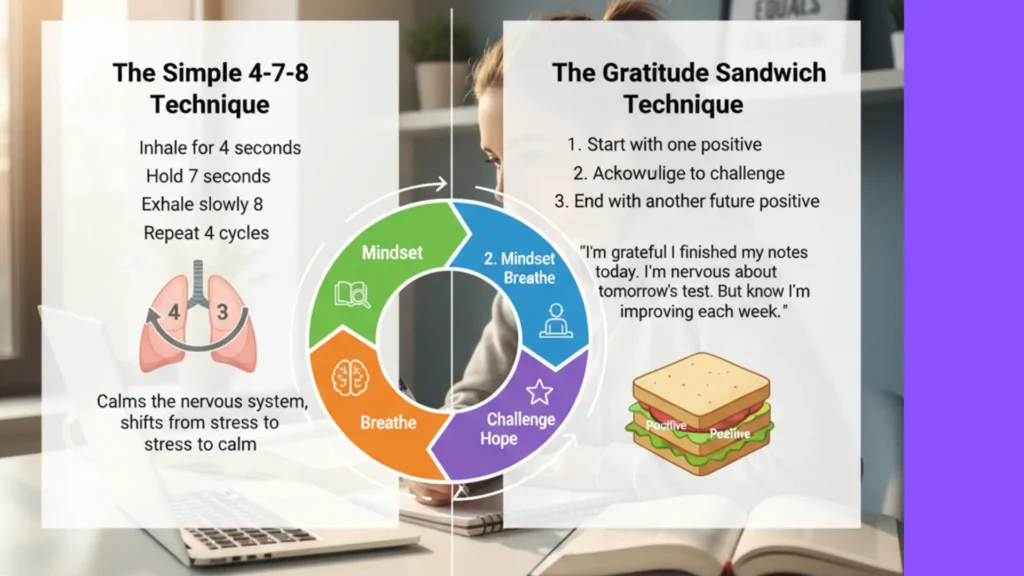
Managing stress isn’t only about academics and sleep; it’s about your inner dialogue. Students often spiral into negative thinking patterns, which makes stress feel even heavier. Simple mindset routines can rewire the brain for resilience.
The Simple 4-7-8 Breathing Technique
This powerful technique instantly calms the nervous system:
- Inhale for 4 seconds
- Hold for 7 seconds
- Exhale slowly for 8 seconds
Repeat 4 cycles. Within minutes, your body shifts from stress mode (fight or flight) to calm mode (rest and digest). It’s perfect before exams, presentations, or even when anxiety sneaks up out of nowhere.
The “Gratitude Sandwich” Technique
Here’s how it works:
- Start with one positive thing you’re grateful for.
- Acknowledge the challenge you’re facing.
- End with another future positive you’re hopeful about.
For example:
“I’m grateful I finished my notes today. I’m nervous about tomorrow’s test. But I know I’m improving each week.”
This framing helps balance perspective; it doesn’t ignore challenges but places them in a hopeful context.
Routine 5: Building Accountability and a Support System

Even the strongest routines fail if you try to carry them alone. Students succeed faster when they build systems of accountability and lean on available resources.
Setting Up a “Routine Accountability” Buddy
Find a friend, classmate, or mentor who also wants structure. Agree on weekly check-ins (10–15 minutes is enough). Share wins, struggles, and one thing you’ll commit to improving.
Accountability transforms routines from “ideas” into consistent actions. Just knowing someone else will ask about your progress makes you more likely to follow through.
Utilizing Campus and Online Resources
Most campuses already provide resources like:
- Counseling centers for stress management
- Study skills workshops
- Peer mentorship programs
- Online communities (like LinkedIn groups or student forums)
The key is not waiting until stress becomes unmanageable. Proactively using these services creates a safety net, ensuring students never feel completely alone.
Conclusion: From Stress to Success
Success in student life doesn’t come from working harder it comes from working smarter, with routines that protect mental health. By optimizing sleep, structuring study cycles, moving your body, regulating emotions, and building support systems, stress transforms from a burden into a motivator.
These aren’t complicated changes; they’re small, repeatable routines that compound over time. Start with one routine today, then build step by step. Soon, you’ll notice better focus, higher energy, calmer emotions, and the confidence that student life is not about surviving but thriving.
What is the best daily routine for a student to reduce stress?
The best daily routine balances sleep, study, movement, and relaxation. For example, following the 3-2-1 sleep rule, using the 50/10 focus cycle, adding short stretches, and ending the day with gratitude can dramatically lower stress while keeping you productive.
How can students manage stress before exams?
Before exams, students should focus on short, structured study blocks, light movement like walking, and calming techniques such as the 4-7-8 breathing exercise. Avoid last-minute cramming late at night good sleep before an exam is more powerful than extra hours of study.
What role does sleep play in academic success?
Sleep is the foundation of focus and memory. Without proper rest, the brain struggles to retain information and regulate emotions. Students who consistently get 7–8 hours of sleep often perform better academically and manage stress more effectively.
How do small routines actually improve mental health
Small routines reduce decision fatigue, bring consistency, and give students a sense of control. Even simple habits like turning your phone off during study sessions or writing a 15-minute journal at night can reset the brain and lower stress levels.
What is the easiest routine to start with for overwhelmed students?
The easiest starting point is the brain dump journal before bed. It only takes 10–15 minutes but clears mental clutter, improves sleep, and sets a positive tone for the next day. Once that’s consistent, students can layer in other routines step by step.
How can I stay consistent with these routines?
Consistency comes from accountability. Having a study buddy, setting reminders, or joining an online student community can keep you on track. Start small and add routines gradually instead of overwhelming yourself with too many changes at once.
Related Articles And Topics

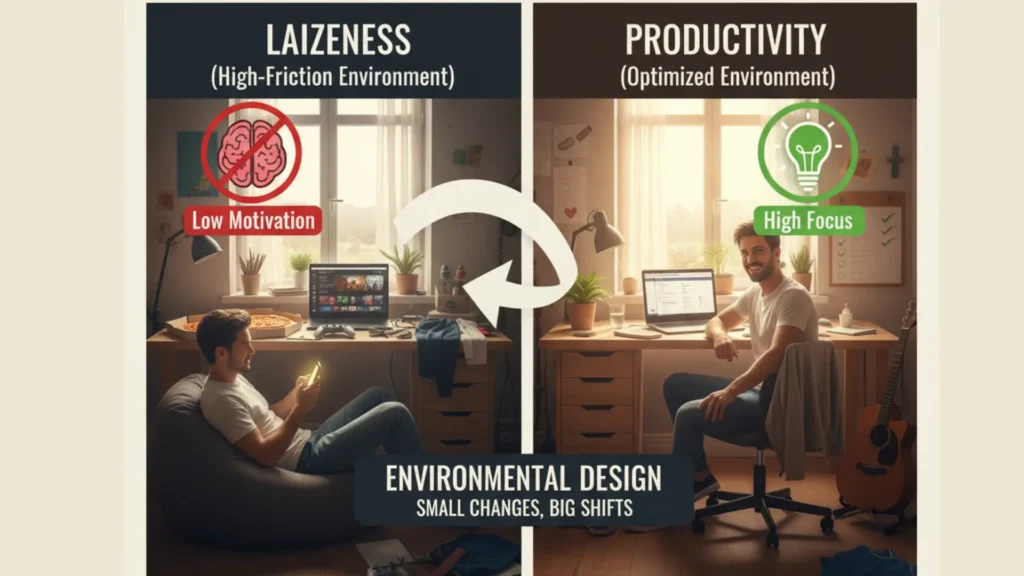












Unlock 150 motivational quotes for students to beat laziness, stay focused, and build confidence. Perfect inspiration for exams, studies, and daily success ,..readmore..