Table of Contents
Study Smarter, Not Longer: 7 Science-Backed Ways to Actually Retain What You Learn

You already study. That’s not the problem.
The problem is how you study — and most students are using techniques that feel productive but barely work. Re-reading your notes for the third time? That’s not studying. That’s just spending time near your textbook.
Here’s what the research actually says. three hours of passive re-reading, consistently.
What Does "Studying Effectively" Actually Mean?
Studying effectively means using methods that align with how your brain actually encodes and retrieves information, rather than methods that simply feel familiar or comfortable. It is the difference between passive review — re-reading, highlighting, listening — and active engagement, where your brain is forced to reconstruct knowledge under slight pressure.
According to a 2017 study published in the International Journal of Surgery Oncology (PMC5673147), students who used active recall and spaced repetition significantly outperformed those who relied on passive re-reading alone — and this pattern held regardless of subject matter or academic level.
Most people assume studying more hours is the fix. The data says otherwise. Sixty minutes of active recall beats
Why Your Current Study Habits Are Probably Failing You
Let’s be direct about something uncomfortable.
Re-reading feels good because familiarity mimics understanding. When you see the same page again, your brain registers it as “known” — but that recognition is not the same as being able to retrieve it under exam pressure. This is called the fluency illusion, and it’s why so many students are blindsided when they blank out mid-test.
Here’s the thing: highlighting has the same problem. You’re not generating any new neural pathways — you’re just making the page prettier.
What most guides skip is the neurological explanation. Your brain stores memories through a process called consolidation, which is strengthened every time you actively retrieve a memory — not every time you passively see it. If you never force retrieval during study, you’re skipping the entire mechanism that makes knowledge stick.
Some experts argue that long uninterrupted study sessions build focus and discipline. That’s valid if you’re warming up on easy material. But if you’re dealing with complex concepts that need deep encoding, marathon sessions actually trigger cognitive fatigue before consolidation can complete. The sweet spot, based on most cognitive science research, is 25–50 minute focused blocks with deliberate breaks.
study schedule templates → “how to build a weekly study routine
7 Study Techniques That Are Actually Backed by Research
1. Active Recall — The Hardest, Most Effective Method
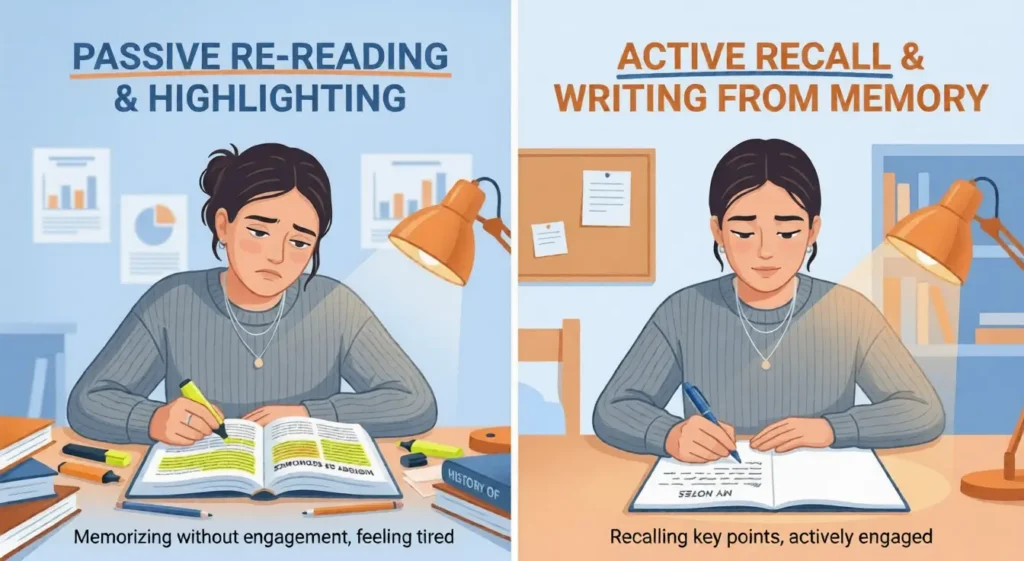
Close your notes. Try to write down everything you remember from the last 20 minutes of studying.
That discomfort you feel? That’s learning happening.
Active recall forces your brain to retrieve information rather than re-expose itself to it. Every failed retrieval attempt is still strengthening the neural pathway — which is why practice tests outperform re-reading by a wide margin in almost every cognitive science study published in the last 30 years.
To use active recall in practice:
- Read a section once, then close the material.
- Write or say out loud everything you can recall — no peeking.
- Check what you missed, note the gaps, and repeat the process 24 hours later.
2. Spaced Repetition — Study Less, Remember More
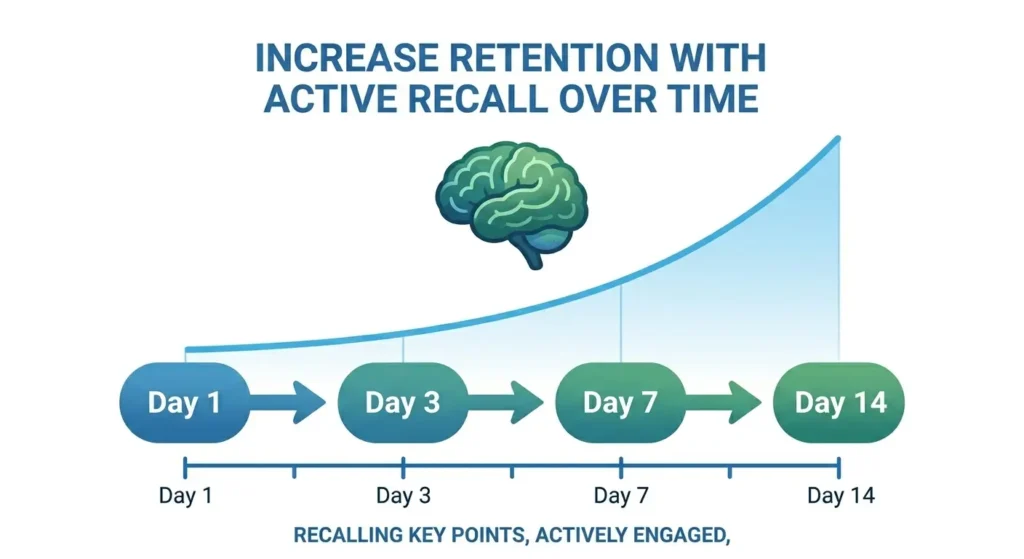
Here’s the counter-intuitive part: studying the same material two days apart beats studying it twice in one sitting.
Your brain treats information reviewed after a gap as more important than information reviewed immediately — because in biological terms, if something keeps reappearing, it must matter. Spaced repetition exploits this directly by scheduling review sessions at increasing intervals: day 1, day 3, day 7, day 14.
Anki is the go-to tool for this. It’s free, runs on any device, and automatically schedules your flashcard reviews based on how well you recalled each card. Students who use Anki consistently report retaining information months later with minimal review time.
Quick note: Anki has a learning curve. Spend 20 minutes on a tutorial before you start — the setup time is worth it.
3. The Pomodoro Technique — Structure That Prevents Burnout
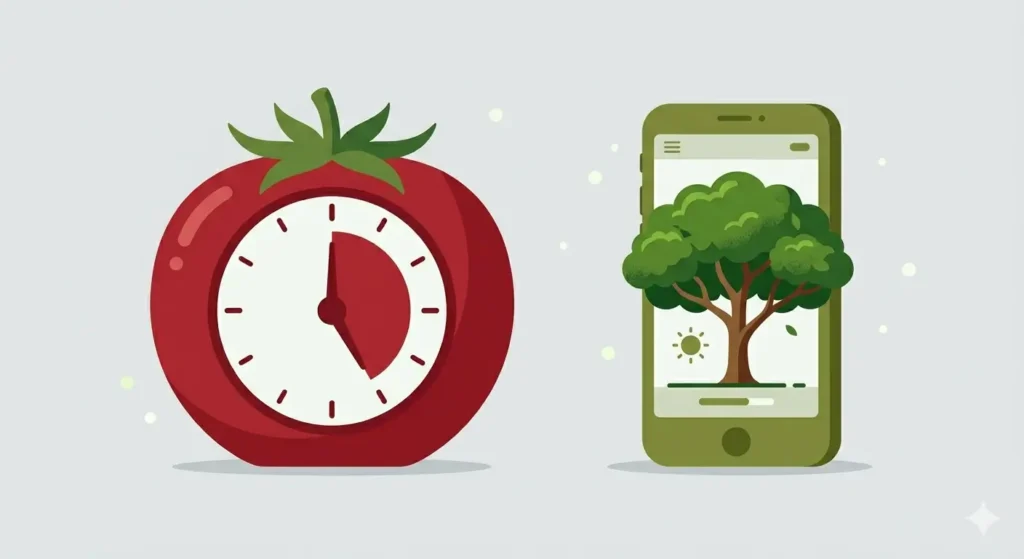
25 minutes of focused work. 5-minute break. Repeat four times, then take a longer break.
That’s it. Simple, and it works.
The reason isn’t magic — it’s that artificial deadlines create urgency. Knowing you only have 25 minutes left makes distraction feel costlier. The Forest app gamifies this well: you plant a virtual tree that dies if you leave the app during a session. Shallow, maybe. Effective? Yes, for a lot of people.
Or maybe I should say it this way: the tool matters less than the principle. Segment your time, protect your focus windows, and treat breaks as mandatory — not optional rewards.
4. Interleaved Practice — Stop Blocking Your Subjects
Most students study one topic until they feel done, then move to the next. This is called blocked practice, and while it feels orderly, it’s one of the least effective structures for long-term retention.
Interleaving — mixing different topics or problem types within a single study session — forces your brain to discriminate between concepts and retrieval strategies. It feels harder. That’s the point.
I’ve seen conflicting data here — some studies show interleaving underperforms blocked practice on immediate tests, while others show it dramatically outperforms it on delayed tests (which is what exams actually are). My read is: use interleaving whenever your goal is long-term retention, not short-term comfort.
5. The Feynman Technique — Teach It to Understand It
Pick a concept. Try to explain it out loud as if you’re teaching a 12-year-old.
Every point where you stutter, simplify, or go vague — that’s a gap in your understanding, not just your recall. The Feynman Technique exposes the difference between recognising something and genuinely understanding it.
Notion works well for this: create a blank page, title it with a concept, and write your explanation from scratch without referencing notes. What you can’t explain, you don’t know yet.
6. Retrieval-Timed Note-Taking
Don’t transcribe lectures. That’s secretarial work, not studying.
During a lecture or video, jot down only key ideas one line per concept, max. Immediately after the session ends, close your notes and write a one-paragraph summary from memory. Then compare. The delta between what you thought you knew and what you actually wrote is your real study priority list.
7. Environmental Anchoring
Your brain encodes memory in context. Studying in the same environment where you’ll be tested (or at least varying your study environments regularly) improves retrieval under pressure. This isn’t mysticism — it’s context-dependent memory, well-documented in cognitive psychology.
If you always study at the same desk with the same playlist, you may find exam-hall recall harder than you expected. Vary your locations occasionally, and try to simulate test conditions — silence, no phone, time pressure — at least once per subject before the actual exam.
Quick Comparison: Study Methods at a Glance
| Method | Best For | Key Benefit | Limitation |
|---|---|---|---|
| Active Recall | All subjects | Highest retention rate | Mentally demanding |
| Spaced Repetition | Factual/vocab-heavy subjects | Long-term memory | Requires planning ahead |
| Pomodoro Technique | Focus and pacing | Prevents burnout | Not suited for deep flow states |
| Interleaved Practice | Mixed-topic subjects | Improves discrimination | Feels harder, slower initially |
| Feynman Technique | Conceptual understanding | Exposes real gaps | Time-intensive |
What's the Best Time to Study?
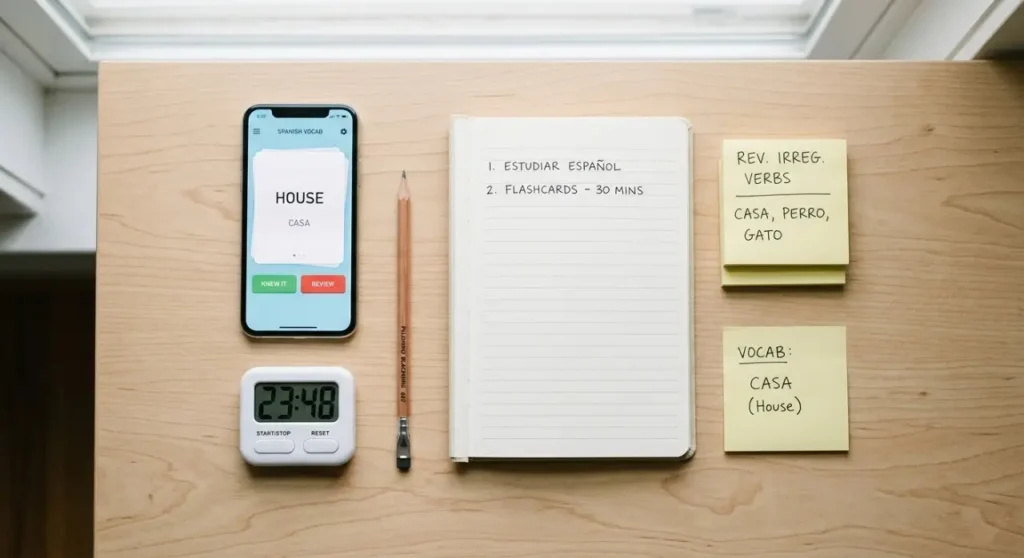
Studying effectively starts with timing your sessions to match your cognitive peaks.
According to research cited by PSB Academy, early morning hours between 4am–7am show strong results for some learners — but this varies significantly by chronotype. Night owls retain information better in evening sessions. The honest answer is: test both for two weeks and track your recall scores. Personal data beats generalized advice.
The worst time to study is immediately after a large meal or when you’re genuinely fatigued. Caffeine delays the problem — it doesn’t fix it.
How Long Should a Study Session Be?
Cognitive science consistently points to 25–50 minute focused blocks as the optimal range for most learners, with deliberate 5–10 minute breaks between sessions. Sessions beyond 90 minutes without a break show diminishing returns in most retention studies.
This doesn’t mean you can’t study for 3 hours total — it means you should break that time into blocks rather than treating it as one marathon.
“Look — if you’re preparing for an exam two days out and you haven’t started, three 50-minute blocks with 15-minute breaks will outperform one three-hour panic session every time.”
5 Questions Students Actually Ask Out Loud
Q: What's the best study technique for remembering information long-term?
A: Spaced repetition combined with active recall. Review material at increasing intervals — day 1, day 3, day 7 — and test yourself each time rather than re-reading. This mimics how long-term memory consolidation actually works.
Q: How do I stop forgetting what I studied the night before?
A: You’re likely studying passively. Switch to active recall — close your notes after reading and write down everything you remember. Doing this within 24 hours of first learning something dramatically reduces the forgetting curve.
Q: Should I study one subject at a time or mix them up?
A: Mix them up. Interleaving subjects in a single session feels harder but produces significantly better retention on delayed tests — which is what exams are.
Q: Why does re-reading feel helpful but not work?
A: Because familiarity mimics understanding. When you re-read, your brain flags the material as “seen before” — but that’s recognition, not retrieval. Only retrieval practice builds the neural pathways needed for exam performance.
Q: When should I use Anki vs. regular notes?
A: Use Anki for anything that requires memorization — dates, formulas, definitions, vocabulary. Use regular notes (Notion works well here) for conceptual understanding and synthesis. They solve different problems.
This guide covers proven cognitive techniques applicable to most academic subjects. It does not address exam anxiety, ADHD, or learning differences — each of which requires additional specialist strategies.
Related Articles And Topics


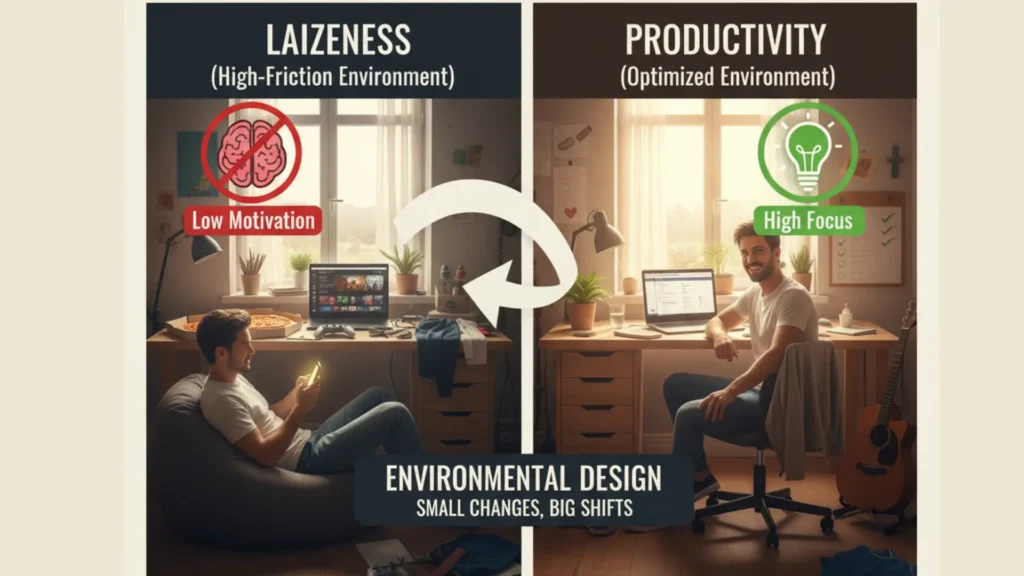








Unlock 150 motivational quotes for students to beat laziness, stay focused, and build confidence. Perfect inspiration for exams, studies, and daily success ,..readmore..